
Choose between grinding wheels and flap discs by geometry, removal and finish, then validate the sequence.
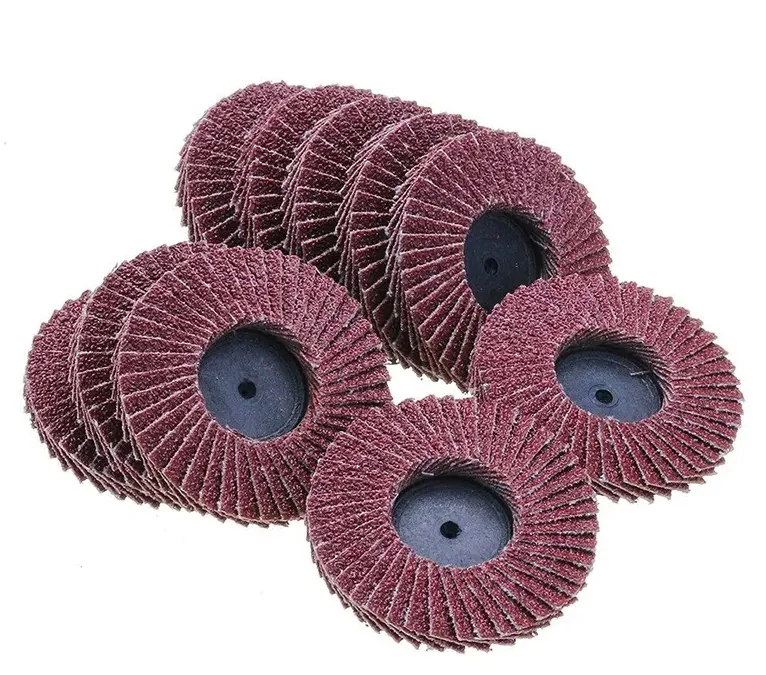
Answer first: Choose by workpiece geometry, approved operation and target finish. The forum reports do not establish a universal ranking for removal rate, service life or finish. GNOSIQ GN-FD options include aluminum oxide, ceramic and zirconia constructions.
Source question: "Cutting power of grinding Vs flap discs?", MIG Welding Forum, with roughly 20 detailed replies from working welders.
Where the debate started
A welder posted a blunt question on the MIG Welding Forum: he had never gotten much power out of grinding discs, suspected he was missing something, and asked when anyone would choose a grinding disc over a flap disc.
Twenty-odd experienced replies later, the picture is clear. The two discs are not doing the same job, so arguing about which is "stronger" misses the point entirely.
Why they are different: edge versus face
A grinding wheel is a rigid bonded-abrasive product. Its approved working surface and angle depend on the wheel type and manufacturer instructions; do not treat a grinding wheel as a cut-off wheel.
A flap disc is dozens of overlapping abrasive flaps bonded to a backing plate. You work with its face: overlapping flaps contact the surface. Removal rate and finish still depend on the exact disc, workpiece and operating conditions.
Working angle depends on disc shape. Norton distinguishes T27 and T29 flap-disc angles; use the angle and working surface specified for the actual disc. Never grind on the edge of a flap disc.
Contact geometry helps frame the choice; the actual product instructions and a representative-part trial still govern selection.
When to reach for the flap disc
Flat steel, heavy stock removal, weld blending. Some contributors preferred a flap disc for flat-surface weld blending and reported a useful finish in their own work. Those accounts do not establish a controlled speed comparison or show that a separate finishing step can always be omitted.
Post-weld cleanup, paint and rust removal. Several posters described a preference for flap discs in daily work. Vibration, handling and loading need to be compared with the actual machine, disc and surface condition.
Compare a ceramic construction where appropriate. The discussion includes positive reports about ceramic flap discs. It does not establish a general speed, finish or cost advantage for GNOSIQ products. Compare candidates under the same conditions and check heat, removal and the accepted surface separately.
One auto-body repair welder described a 40-grit, 80-grit and 100-grit progression. That is an individual workshop example, not a validated GNOSIQ sequence. Confirm the grading system, coating, permitted removal and next stage before adapting it.
Where a suitable grinding wheel may help
Weld roots and tight corners. One contributor described difficulty reaching a weld root with a flap disc. Check corner clearance, disc geometry and the approved working surface for the actual operation; a forum account is not permission to use an unapproved edge or contact angle.
Bevel preparation. Use a wheel and machine explicitly rated for that operation. A forum report of cutting a groove is not permission to use a grinding wheel for cut-off work, and does not establish weld penetration.
Heavy rust and scale. Loading and wear depend on the contamination, abrasive construction and operating conditions. Assess them on the actual surface rather than assigning a universal advantage to either disc type.
Thin sheet bodywork. Heat and distortion depend on pressure, dwell, abrasive, contact and sheet thickness. Validate on a representative scrap piece rather than assuming one wheel type always runs cooler.
A sequence to validate
The discussion suggests separating removal, scratch refinement and blending rather than expecting one consumable to complete every stage:
Define the permitted removal and acceptance finish first. Review a suitable removal tool, a refinement step and a blending construction, then validate the sequence on representative parts. Do not treat the forum progression as a universal process specification.
Non-woven construction is a candidate for surface blending. Check the current GN-FD-NW47 product page for its documented grade, dimensions and attachment; suitability and the final appearance still require an application trial.
Choosing the abrasive: aluminum oxide, zirconia, ceramic
- Aluminum oxide (GN-FD-AO41): brown fused alumina with grinding aid. Confirm the required grade, format and process conditions before comparing cost or performance.
- Zirconia (GN-FD-ZA45): zirconia alumina construction. No controlled comparison here establishes a service-life advantage over another GNOSIQ model.
- Ceramic (GN-FD-CA43): ceramic aluminum oxide construction. Assess removal, heat, finish and cost in the intended application rather than assuming a speed advantage.
- Non-woven (GN-FD-NW47): surface blending and satin finishes.
- Wool: GN-FD-WL49A / GN-FD-WL49B final polishing. Final gloss depends on the incoming surface, compound, pad, machine and verified process.
Use the linked product pages for the currently published model-specific grades, dimensions and attachments. Confirm the selected configuration and sample result before ordering; a listed grit range does not establish removal rate or service life.
Safety: two points people skip
First, match the RPM. Every grinding and flap disc is marked with a maximum RPM, and the angle grinder's no-load speed must not exceed it. Checking the label takes ten seconds.
Second, both grinding wheels and flap discs can fail if damaged, mismounted or misused. Keep the guard on, stand to the side, never in line with the rotation plane. That is shop law, not a suggestion.
The one-line selection rule
Select by geometry and approved operation, then compare removal, finish and useful life under the same conditions. Forum experience can suggest what to test; it cannot replace the product instructions or prove a universal winner.
Sources: MIG Welding Forum thread "Cutting power of grinding Vs flap discs?" (https://www.mig-welding.co.uk/forum/threads/cutting-power-of-grinding-vs-flap-discs.121646/); forum reports are individual workshop experience, not controlled GNOSIQ test results. Current GNOSIQ specifications are available on the linked product pages; follow the manufacturer instructions for the selected disc.
Manufacturer safety guidance: https://www.nortonabrasives.com/en-us/resources/expertise/dos-and-donts-flap-discs ; https://www.nortonabrasives.com/en-gb/resources/expertise/rag-cutting-grinding